Vitalsphere
Digital
Custom HIPAA-Compliant EHR & EMR Software Development
Make your health records system actually work for your team—and your patients.




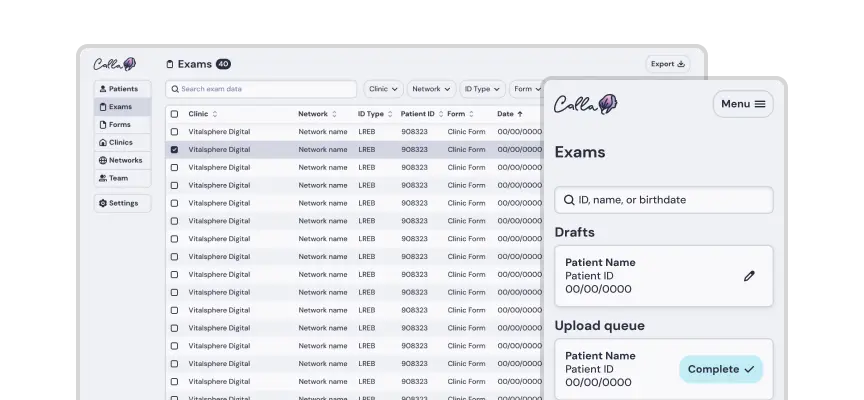
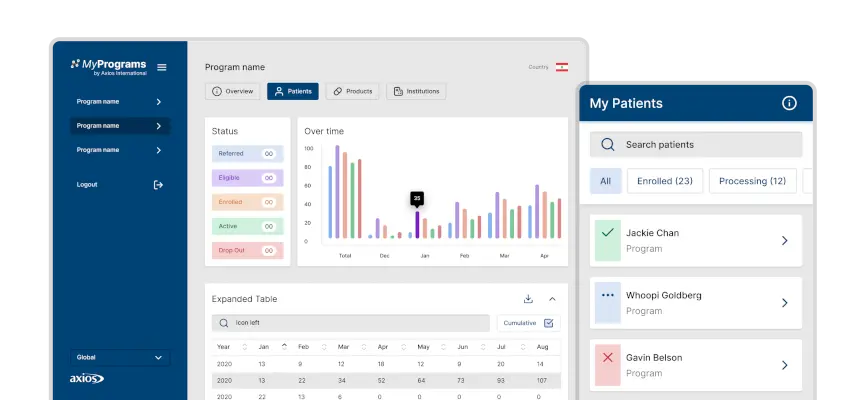
We designed the patient records system and clinician app for a medical company that provides accessible cervical cancer screening →
“Vitalsphere addressed all of our complex requirements with clarity, precision, and technical expertise. They made our project and goals their own. From deeply thought-out, user-centered design to polished implementation, they went the extra mile to make sure all use cases were accounted for. When needed, they synthesized our feedback and iterated quickly. We could rest easy knowing our project was in expert hands.
Their team felt like an extension of ours: collaborative, communicative, and invested in the real-world success of our app. We highly recommend them to any company looking to build quality, impactful software.”




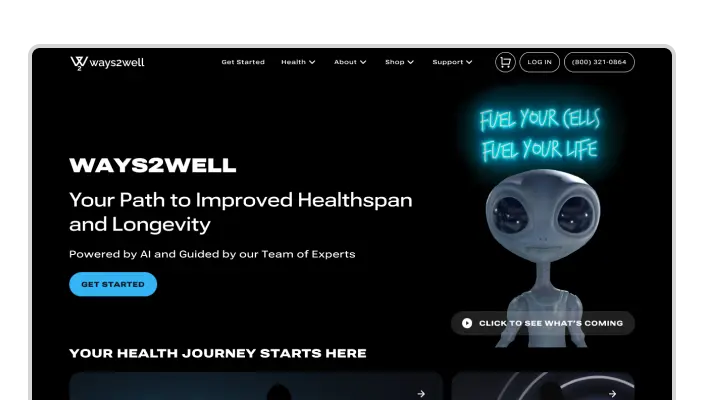
We developed a healthcare startup’s website and built them a full suite of custom EHR integrations →
“Vitalsphere has repeatedly demonstrated an unparalleled level of creativity and innovation, consistently exceeding my expectations at every turn. From the moment I engaged their services, their attention to detail and dedication to excellence was evident in every aspect of their work. They are truly a group of elite experts dedicated to delivering high-quality software.”




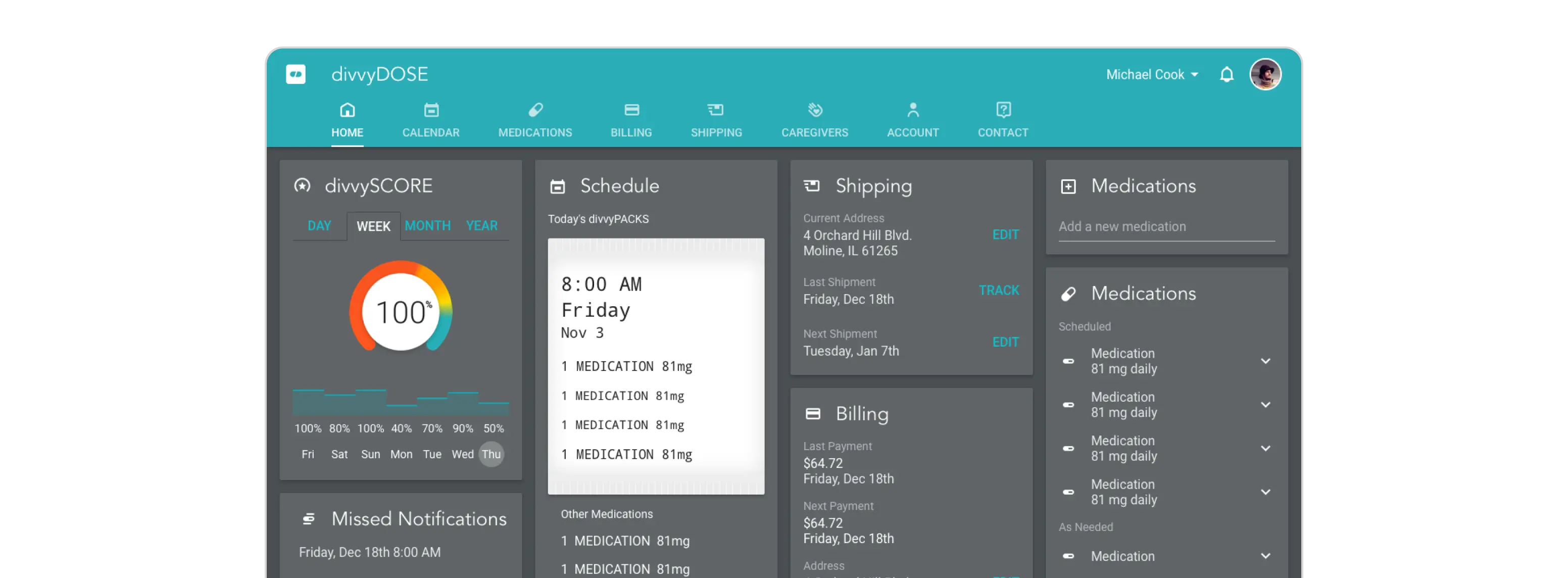
We built a website, a cross-platform app, and custom internal health record system for a full-service online pharmacy →
“Vitalsphere took us from conception to a fully functional customer-facing online pharmacy with a website, web app, iOS app, Android app, and custom internal software systems to manage parts of our operations, all in less than a year. They are a very talented, efficient, and thoughtful team of software designers and developers. It’s clear that they genuinely care about the success of their client’s businesses. If you want your software to be visually appealing, functional, and ultimately successful, Vitalsphere is a great choice.”
Range of ability
Whether you are looking for a few custom integrations or a fully custom build, we’re ready to take on your project.
Optimize your existing EHR/EMR
For when your platform already has the capability but needs a guiding technical hand. We set up the templates, forms, permissions, and automations.
Lightest touch
Extend & customize
We build custom modules and portals for Epic, Charm, eCW, Canvas, or other EHR/EMR platforms. You keep the vendor system underneath.
Most common
Integrations that go beyond
Seamless EHR/EMR integrations with whatever custom software your business needs. We handle all the security layers required.
Higher impact
Fully custom development
When no vendor fits your care model, we design and build the record system from the ground up, compliance included.
Complete
Common problems and the solutions we provide
Off-the-shelf systems make assumptions about how healthcare companies work. Concierge care, remote monitoring, and subscription models are just a few of the common things they don’t support.
We extend it, or build the missing piece.
We keep the vendor system for what it is good at and build the custom modules you need on top of it, so you don't have to buy or build a whole new EHR in order to get the workflow you need.
Each hospital runs a different record system, and every new partner means another round of manual data entry and paperwork chasing.
We automate the handoff between both systems.
For example, for HekaHeart we built an eClinicalWorks integration that pulls patient data when a record is created, generates the right assessment forms in Welkin Health, then pushes them back into eCW. Data remains aligned across both systems.
The care you provide is excellent, but your patient experience looks like something from 2009. Patients judge the whole practice by the screen they log into.
We redesign around what you can and cannot change.
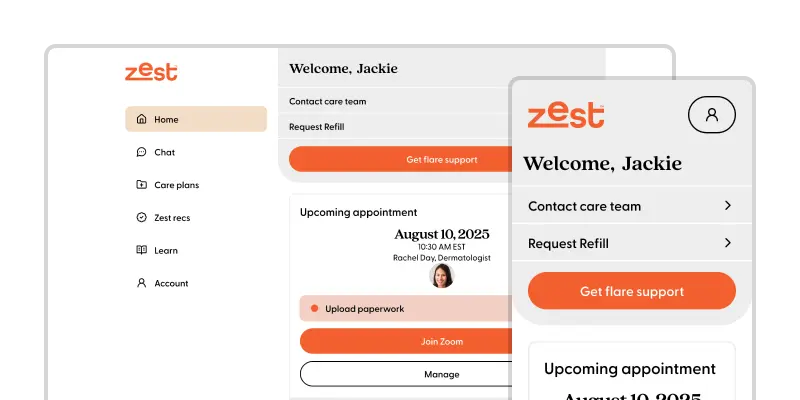
Zest needed a new patient portal but could not touch parts of their user journey. We designed a new patient experience for them that folded the parts we weren’t able to modify in without a seam.
Access controls are informal, audit logs are incomplete, and no one is sure which vendors hold PHI.
We build protections into the software so compliance is enforced automatically.
Role-based access, encryption in transit and at rest, full audit trails, and a written map of where PHI lives and who or what touches it.
AI that delivers genuine value
We’ve been integrating AI into regulated healthcare products since before it was fashionable.
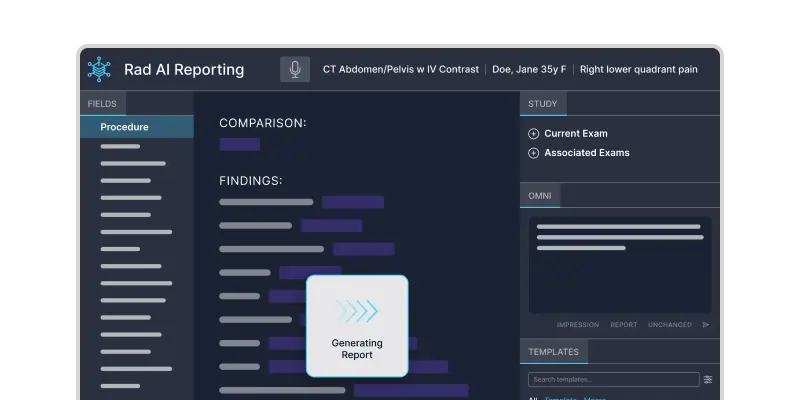
Turning dictation into structured reports
AI-assisted note-taking can save clinicians over an hour a day. We’ve helped companies like Rad AI integrate AI documentation tools into hospital systems.
Some of the systems we work in

Interface and app work against Epic's APIs and FHIR endpoints, including the vendor program requirements that come with it.
Enterprise

Custom API integrations pushing intake, scheduling, and patient data into Charm. Built and running for Ways2Well.
Ambulatory

Two-way integration for HekaHeart: patient pull on record creation, generated assessment forms pushed back into eCW.
Ambulatory

FHIR-native EHR work for teams that want to build their own clinical workflows on top of a programmable record.
API-first

Scheduling, charting, and billing integrations for telehealth, nutrition, and coaching businesses running on Healthie.
Virtual care

Data exchange and interface work for products that need to live inside a hospital's existing record system.
Enterprise
Also in our portfolio: Practice Fusion, DrChrono, Allscripts, and Welkin Health. Alongside the EHR itself we regularly connect labs and providers (Wheel, Vital, OpenLoop, Elaborate), pharmacies (TruePill, TCGRx/Parata, QS/1), and CRMs (HubSpot, Salesforce, ActiveCampaign, NetSuite, Caspio).
Schedule a free consultation
We’ll get back to you within 24 hours!
Seven ways we engage
The “thinking phase” is where decisions that make or break a product get made. We come in to answer the expensive questions: whether to buy, extend, or build. Which platform fits your clinical model and your budget. What your current systems can and can’t do. You leave with a sense of scope and a roadmap forward.
- Workflow mapping with your clinical and ops staff
- Assessment for building, buying, or extending
- EHR platform audit and API capability review
- Integration architecture and data flow design
- HIPAA and security planning
- Roadmap and budget
We stand the system up and get your team using it. This covers configuration, the data model, the interfaces to everything else you run, testing, go-live, and the training needed to integrate new tools into your workflows.
- Environment setup and secure hosting
- Configuration, templates, and clinical forms
- Interface build: HL7 v2, FHIR, CCDA
- QA and end-to-end clinical testing
- Phased go-live and cutover planning
- Staff training and documentation
Your system can already do most of what you need; we build the rest. Custom modules, screens, and logic that sit on top of the platform you already pay for, so you get all the benefits of a tailor-made product without the maintenance involved in a custom EHR.
- Custom modules and SMART on FHIR apps
- Patient portal and provider dashboard design
- Custom intake questionnaires and charting forms
- Role-based views and permissions
- Reporting and clinical dashboards
- Workflow automation and task routing
The work we get asked for most. We connect your EHR to labs, pharmacies, remote monitoring devices, billing, CRM, and your own products, so data moves automatically, efficiently, and accurately.
- EHR to CRM, billing, and scheduling
- AI integrations
- Lab and provider network feeds
- Pharmacy and ePrescribing systems
- Remote patient monitoring and device data
- Health information exchange and CCDA
- Reconciliation, retries, and failure alerting
Moving off a legacy system is a data problem, and one we’ve seen go disastrously for companies without proper support. We map, clean, and move your charts with the history intact, run both systems side by side until the numbers match, then switch you over.
- Data audit and field mapping
- Cleansing, de-duplication, and backup
- Chart and document conversion
- Dry runs and parallel operation
- Post-migration validation against source
- Audit trail and record retention preservation
Sometimes no existing platform fits your clinical model, or the licensing and workaround costs outgrow the cost of building. In those cases, we build an EHR designed around how your clinicians actually work. We handle the architecture, the clinical data model, compliance, and the standards that let your system exchange data with the rest of healthcare, then carry it through launch.
- Product discovery and clinical workflow design
- Clinical data model built on FHIR standards
- Charting, orders, scheduling, and e-prescribing modules
- HIPAA-compliant architecture and hosting
- Launch planning and a path to long-term support
Record systems are never finished. Vendors ship system-breaking API changes, regulations move, and your own clinical model keeps developing as your business grows. We stay on to monitor interfaces, absorb platform updates, and keep building.
- Interface monitoring and uptime alerting
- Vendor API and platform version upgrades
- Bug triage with agreed response times
- Security patching and dependency updates
- Ongoing feature work on a retained team
- Quarterly review of cost, risk, and roadmap
There is no such thing as HIPAA-certified software
Compliance is a set of controls plus the evidence that you operate them.
Controls we build
- Encryption in transit and at rest, with key management
- Role-based access control and minimum necessary access
- Complete audit logging of who read or changed what
- Session handling, MFA, and automatic timeouts
- Secure messaging, file handling, and PHI storage
Proof we document
- A written map of where PHI lives and who touches it
- BAAs with every vendor in the chain, including AI providers
- Risk analysis and remediation plan
- Breach response procedure your team can actually follow
- Hosting choices that keep your compliance surface small
How we run an EHR project
01 Scope
With any project, we begin by clarifying the high-level details of intended functionality. A thorough understanding of your needs, your vision, and the challenges you face gives us what we need to craft custom software to take your business to the next level.
02 Protogenesis
Our designers and developers work together to chart a clear course towards your long-term goals while also identifying the most expedient feature set for an initial release.
03 Mitosis
With a roadmap forward, we divide and conquer. Our design and development teams break complex tasks down into an efficient sequence of actions.
04 Manage
We are constantly reviewing the roadmap ahead of us and asking where lurking complexity might be hiding and what order of operations will maximize smooth progress. Project needs can also shift, which means we stay on our toes.
05 Design
Our designers crystallize your vision into a set of beautiful, functional designs that serve as blueprints for your software or website.
06 Develop
Our developers deeply understand the technical needs of your business and write high-quality custom code to solve real-world problems.
07 Synthesis
We work closely across teams and departments to refine our work.
08 Patternization
To achieve coherent, scalable software we think systematically about all elements of a project.
09 Implementation
We see projects through to completion and stick around to maintain and enhance.
FAQ
It depends almost entirely on scope, so we scope before we quote. A CharmHealth intake integration is a very different number from a custom EMR with ePrescribing and billing. The things that impact the price most are the number of interfaces, whether the vendor API supports writes, how much legacy data has to migrate, and how many distinct user roles need their own screens. We’re happy to hop on a free call to discuss and give you a broad-strokes sense of the price range you are looking at.
A single well-documented integration can ship in four to eight weeks. A custom patient portal or provider app on top of an existing EHR usually runs three to six months. A full custom EMR or a migration off a legacy system is a longer program, often nine months or more, and is best broken into releases rather than one launch. Vendor approval processes for enterprise platforms can add months on their own, so we start those first.
Customize unless you have a specific reason not to. Building your own record system means shouldering the responsibility for compliance, uptime, interoperability, and years of maintenance that a vendor would otherwise handle. That said, building makes sense when your care model is genuinely unique, when the record itself is part of your product (and not just a tool you use), or when vendor licensing at your scale costs more than engineering. We will tell you honestly which side you fall on.
Connecting to a health system takes two kinds of work, done at the same time. The technical work is usually building FHIR or HL7 v2 interfaces, and both standards are well documented. The approval work means registering as a vendor, passing a security review, and signing agreements with each health system you connect to. Approvals usually take longer than the coding, so start them first.
Use whichever one your system supports. FHIR is the newer standard, built on web APIs, and is the better choice for new work. HL7 v2 is older and sends data as individual messages, but most hospitals still use it for much of their data exchange. In practice we build both, often on the same project. We also use CCDA when whole documents, such as patient summaries, need to move between systems.
No. HIPAA names required safeguards, not products. AWS, Google Cloud, and Azure will all sign a BAA and can be configured compliantly. What matters is encryption, access control, audit logging, backup, and a signed agreement with every vendor that stores or processes PHI. We help you choose a setup that keeps the number of systems touching PHI as small as possible, because every one of them is another agreement and another review.
Yes, with care. The model vendor must sign a BAA, prompts and outputs need to be logged like any other access to PHI, and anything clinical needs a human making the final call. Where the use case allows it, de-identifying data before it reaches the model removes most of the problem. We build the plumbing so these rules hold by default rather than depending on a policy document.
Yes. Record systems need ongoing attention because vendors change APIs, regulations shift, and clinical models develop. We offer monitoring and maintenance, and most clients keep a retained team for continued feature work. Our process includes staying on after implementation rather than handing over and leaving.
Case Study Highlights






Testimonials
What do you want to build?
Describe the record system you have, the workflow that is not working, or the product you want to build on top of it. We will tell you what it takes, what it costs, and what we would do first.
We’ll get back to you within 24 hours!